
How to Care for Your Silk Carpet – Daily Care and Troubleshooting
I once asked an elderly weaver in Qom's workshop, "How do I care for a rug to make it last longer?" Her answer was not a complex technical theory, but a simple phrase: "Treat it like a member of the family." Avoid moisture, air it out occasionally, and if it gets dirty, act quickly without panicking. Continuing these small considerations in your daily life ultimately leads to the most effective care.
Silk Persian rugs are, admittedly, made from delicate materials. However, if you keep a few basics in mind, you can continue to use them for decades, passing them down through generations. Here, from the perspective of the Golestan store owner, I will explain in order, from what to do immediately after a new rug arrives, to daily care, stain treatment, storage, and long-term cleaning after extended use.
This article is useful for both those who have already acquired a silk rug and those who are considering acquiring one. Golestan's silk pieces from Qom, carefully selected locally, can be enjoyed for a lifetime and passed down as a family heirloom if you understand the basics of care.
Immediate Treatment Upon Arrival — First, Take it Out of the Bag
When a new rug arrives, take it out of its packaging bag and unroll it as soon as possible. The packaging during transport is for short-term protection, and leaving it confined in the bag for a long time will trap moisture. Moisture can cause mold and insects, so exposing it to fresh air is the first step.
Choose a location that does not receive direct sunlight for long periods and is well-ventilated. Let it gradually adapt to its new environment, observing it for a few days after laying it out.
Creases from Folding Disappear Naturally in About a Month
Immediately after unrolling, there may be creases from folding. Since silk is a flexible natural fiber, it is common for traces of being folded for transport to remain. As you lay it out and use it, the weight of the rug, the pressure of walking on it, and the humidity in the room will naturally cause the creases to settle and become unnoticeable in about a month. There's no need to rush.
If you want to remove the creases quickly, you can try methods such as holding the edge of the rug and gently shaking it, or spreading it out in a well-ventilated shaded area. If using steam, keep the iron 15-20cm away from the rug and gently apply low-temperature steam. Never apply the iron directly to the rug. Silk is sensitive to heat and can scorch or discolor.
Storage Environment — Temperature, Humidity, and No Sealing
A comfortable environment for a silk rug is almost the same as a comfortable environment for humans. The guideline is a temperature of 10-25°C and humidity of 40-60%. Avoid places where air conditioning blows directly, extremely dry areas, or places where direct sunlight shines for long periods.
Never seal a rug in a plastic bag or similar. This will trap moisture and become a breeding ground for mold and insects. If long-term storage is necessary, wrap it in breathable cotton cloth or non-woven fabric and place it on a shelf or other elevated surface, away from the floor, for safety.
Daily Vacuuming — With a Flat Nozzle Without a Brush
The core of daily care is vacuuming. Silk is relatively resistant to dust, but if fine debris gets into the base of the fibers, it can damage the pile in the long run.
When using a vacuum cleaner, remove any nozzle with a rotating brush (beater bar) and replace it with a flat nozzle without a brush. Use low suction power and move slowly along the direction of the pile. This is the basic technique for vacuuming a silk rug.
The frequency depends on usage. For high-traffic areas like entryways or living rooms, once or twice a week is sufficient. For rugs in bedrooms or studies, a few times a month is enough. Overdoing it is not recommended; a more moderate approach is better for longevity, considering the strain on the fibers.
If a Stain Occurs — The Iron Rule of "Blotting" and "Drying"
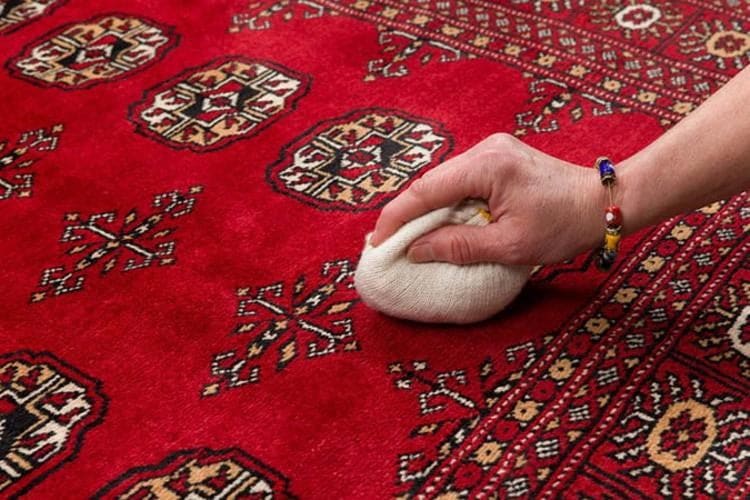
If you spill a drink or other liquid, it's a race against time. There are two iron rules: "blot, don't rub" and "dry thoroughly." If you remember just these, most stains can be dealt with without leaving a ring mark.
Step 1: Blot with a white cloth. Gently press a clean white cloth or paper towel onto the stain to absorb the liquid. The trick is to blot from the outside of the stain towards the center to prevent the stain from spreading. Never rub vigorously. Rubbing will push the dirt deeper into the fibers, making it impossible to remove.
Step 2: Dry completely. If moisture remains and dries, it can cause ring marks or mold. Absorb any remaining moisture with a dry, clean towel, then open windows for ventilation and use a fan or dehumidifier to air dry. Avoid hot air from a hairdryer or direct sunlight, as these can damage silk. If you absolutely need to dry it quickly, you can turn the rug over and blow air from the back.
For difficult stains like coffee, wine, or ink that are hard to treat at home, or stains that have dried and hardened over time, consult a professional cleaning service rather than attempting to fix them yourself. Improper home treatment can worsen stains or damage the fibers.
If You Notice Seams or Fraying
If you look closely at the rug, you may find seams or slightly protruding piles. This is evidence of hand-weaving and is one of the unique characteristics that cannot be replicated by machines. It does not indicate a defect in quality.
If you are concerned about protruding threads, never pull them. Since each pile is independently knotted, you can simply cut them with scissors to match the surrounding length, and there's no need to worry about further fraying.
If there is significant damage to the main body or fraying that you are unsure how to deal with yourself, consult a professional who specializes in Persian rug repair. Fraying of the fringes is often relatively easy to fix, so it's best to consult early if you notice it, assuming you want to use the rug for a long time.
Tips for Long-Term Use — Rotating, Rug Pads, and Furniture
There are several tips to keep your rug beautiful for a long time.
- Rotate it 180 degrees every six months. This prevents wear from concentrated sunlight and foot traffic in one area.
- Place a rug pad underneath. In addition to preventing slipping, it absorbs impact from walking, reducing stress on the rug. It also creates an air layer between the rug and the floor, which helps with moisture control. For silk rugs, a breathable felt type is recommended.
- Use protective covers for heavy furniture legs. If placed directly, the pile can be crushed and difficult to restore. The trick is to distribute the weight over a surface, not just a point, using furniture felt caps or similar.
For those who want to choose a rug that will last a long time — Golestan's rare and difficult-to-obtain masterpieces and works from the Jamshidi family and Mirmahdi workshop are sourced by the owner from local workshops and delivered after being individually checked.
Storage During Non-Use — Hanging on the Wall for Display
It is not recommended to fold and store rugs during periods of air conditioning use in summer or for long periods of non-use. When silk is left folded for a long time, stress is placed on the folds, and moisture tends to accumulate. Instead, we recommend displaying it by hanging it on the wall.
The advantages of wall hanging are, first, that it is always exposed to air, so moisture does not accumulate. This significantly reduces the risk of mold and moth damage. Second, you can admire it daily like a painting. Silk changes its expression with the angle of light, so it shows a different face with the changing times of day and seasons. And silk rugs are significantly lighter than wool rugs of the same size, so they are often easier for women to handle.
Special tapestry hangers are commercially available, and there are also methods of framing them like art. Consider this as a way to combine storage and appreciation, in consultation with your wall space.
Professional Cleaning — Every 10-15 Years
Apart from daily home care, professional cleaning is necessary for long-term use. Silk tends to change texture when wet, and cannot be handled with household detergents or by washing at home. Professional cleaning services have cleaning methods tailored to the rug's material and weave.
The guideline for frequency is about once every 10-15 years if it's placed in a room where shoes are not worn. If it's placed in a high-traffic area or where shoes are worn, it would be advisable to consider it at slightly shorter intervals (5-10 years).
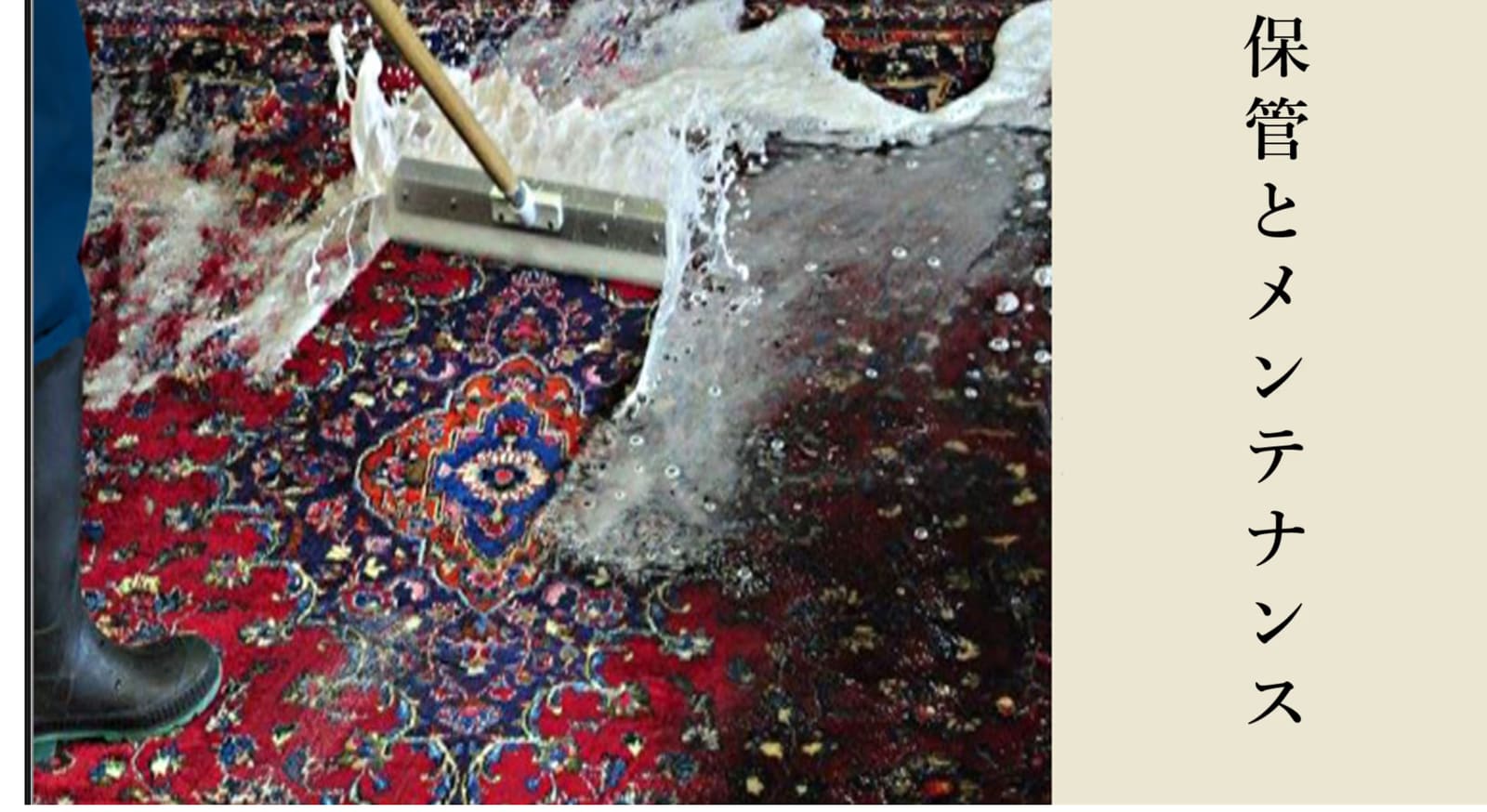
The video shows the "washing" process carried out in the Qom production area. It is only after the woven rug undergoes this finishing wash by local artisans that its inherent luster and texture emerge. Even when sending it for cleaning in Japan, entrusting it to a service that understands the characteristics of Persian rugs is key to restoring its brilliance without damage.
Treat It Like a Member of the Family
A silk Persian rug, if properly cared for, is a craft item that can be used for 100, 200 years. In European museums and old houses, antique silk rugs passed down through generations still retain their luster today.
You don't need complex techniques or expensive tools. Avoid moisture, vacuum regularly, and blot and dry stains quickly. Occasionally rotate it. And instead of storing it away, enjoy it in a visible place. That alone will turn it into a "family heirloom" passed down through generations.
If you're unsure about how to care for your rug, please consult Golestan. It's our job to help you determine where home treatment is sufficient and where professional help is needed.
When Acquiring Your Next Rug
Many customers consult us about acquiring another rug for a different room or for a family milestone, after having a long relationship with a silk rug. You can view Golestan's complete product list and new arrivals on new products. We will help you find your favorite piece, so please contact us.
Found a rug that caught your eye?
Size, budget, whether it suits your room — the owner answers each question with care.